Case History
Custom Solutions for Genoa's Levante Waterfront
Custom-designed Pilomat fixed bollards enhance the appearance and safety of the movable bridges within Genoa's new waterfront public spaces.
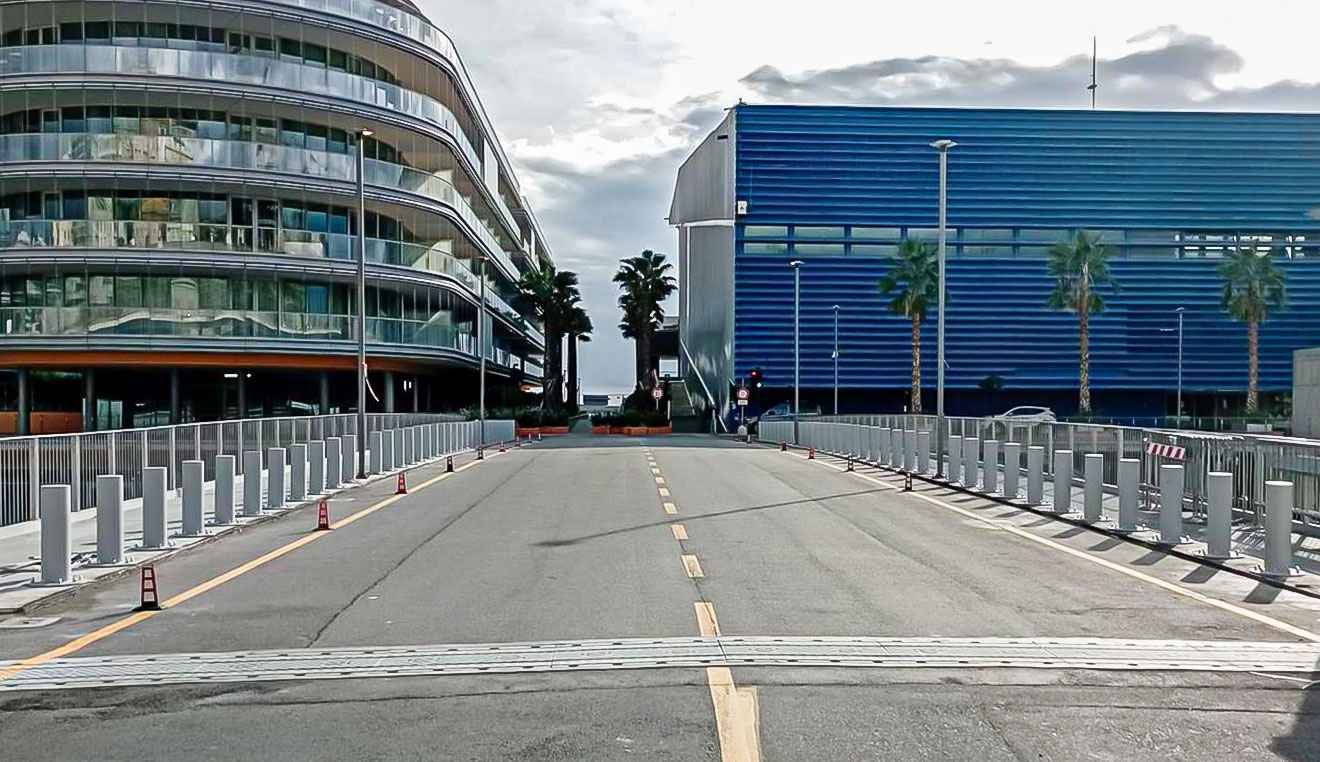
The Levante Waterfront is a major urban regeneration project transforming Genoa's seafront between the Old Port, the Exhibition Centre and the Sports Arena. Once occupied by disused port infrastructure, the area is being redeveloped into a vibrant public destination that reconnects the city's built environment with the waterfront.
Based on a masterplan developed by renowned architect Renzo Piano, the project has been delivered by a multidisciplinary team including Renzo Piano Building Workshop, Open Building Research and Starching. Together, they have redesigned the seafront according to principles of architectural quality, functionality and environmental sustainability.
The aim is to create a new destination for the city, integrated into the network of public spaces, pedestrian routes and infrastructure connecting Genoa's historic centre with the Boccadasse district, while restoring architecturally significant buildings and constructing new transparent buildings for residential, commercial and hospitality use.
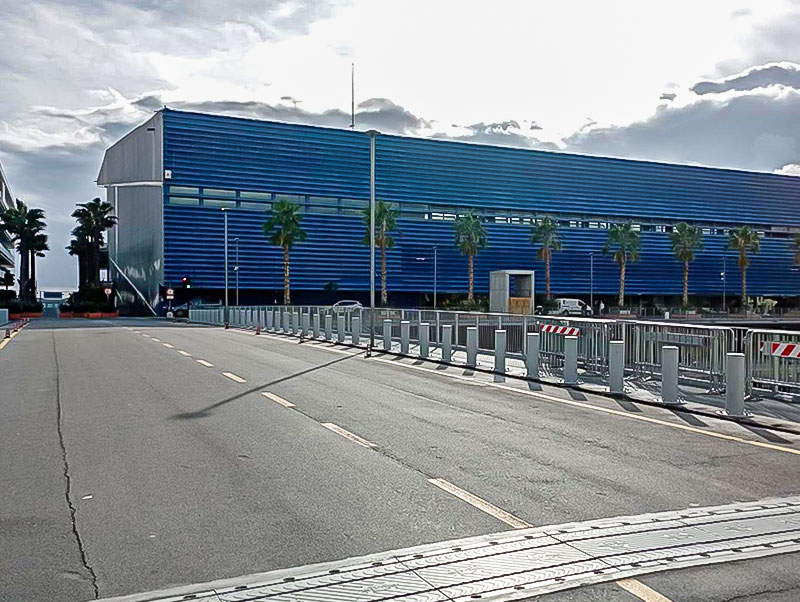
The development extends along the waterfront promenade bordering the new navigable canal and includes a linear park, the redevelopment of the exhibition area, the renovation of the Sports Arena and exhibition pavilion, the reorganisation of marina facilities and the construction of new residential buildings, offices, hotels and other services.
The engineering works required to create the 54,000 m³ navigable canal are particularly impressive. Among the most technically challenging elements are the movable bridges connecting the islands created by the canal with the rest of the waterfront, ensuring uninterrupted pedestrian and vehicle access to key destinations, including the exhibition centre.
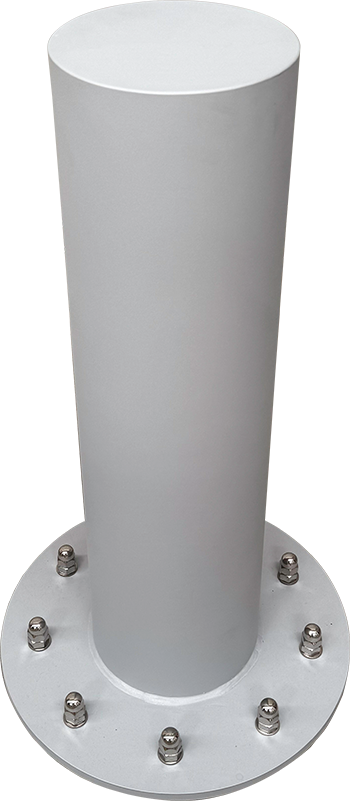
Within this context, Pilomat—one of the world's leading manufacturers of vehicle access control systems—designed and manufactured the custom fixed bollards installed along the bridges. From aesthetics and engineering to safety performance, the company managed every aspect of the project, contributing to the successful completion of this landmark development.
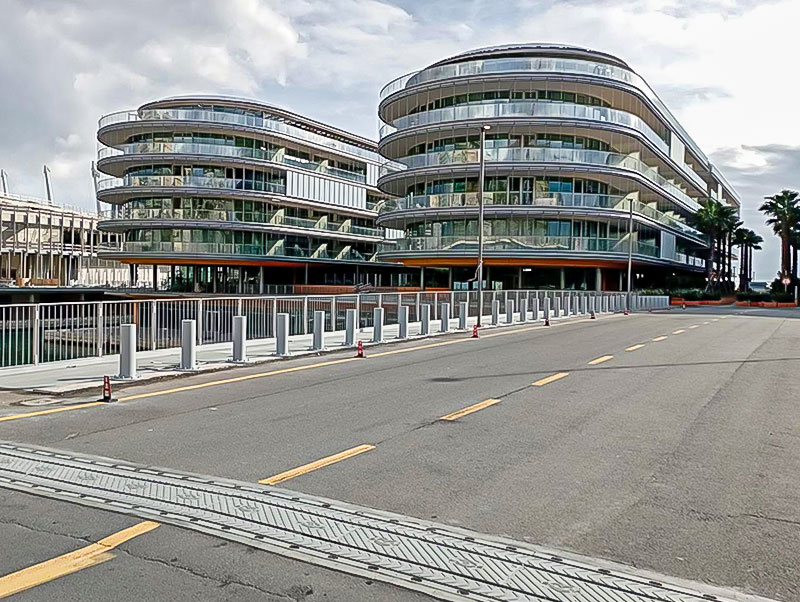
"We were asked to develop an alternative to traditional guardrails along the bridges, as they were considered visually intrusive by the project management team," explains Emanuele Imberti, Pilomat Italy Sales & Service Manager. "Starting from the fixed bollard model that best matched the architectural requirements, we developed an entirely new technical solution."
What challenges did you face, and how were they addressed?
"Both bridges are built using reinforced concrete beams positioned along the sides of the carriageway, which also support the steel pedestrian canopies. The objective was to separate pedestrian walkways from vehicular traffic by creating a barrier capable not only of stopping an impacting vehicle but also of preventing the risk of falling into the canal.
The bollards had to be anchored to the side beams, which had originally been designed for guardrail installation. Our engineering team therefore developed a new anchoring solution using deep-set expansion anchors arranged in a circular pattern around the bollard base. The result is a discontinuous linear barrier offering exceptional structural resistance."
What are the main performance features?
"The project specifications required the barrier to withstand the impact of both a 3.5-ton vehicle travelling at 30 km/h and a 21-ton truck travelling at 5 km/h. The bollards and anchoring system were engineered accordingly.
To validate the design, we initially installed two bollards on each bridge and provided on-site technical assistance during the load tests carried out by the contractor.
Both bridges successfully passed the compliance tests, allowing the contractor to complete the installation of the remaining bollards. A total of 122 custom-designed fixed bollards were installed, each also customised to meet the architects' aesthetic requirements.
"We are extremely proud to have contributed to the success of this prestigious project," concludes Emanuele Imberti, "by applying the expertise and know-how that Pilomat has developed over more than fifty years of experience."
Used product